
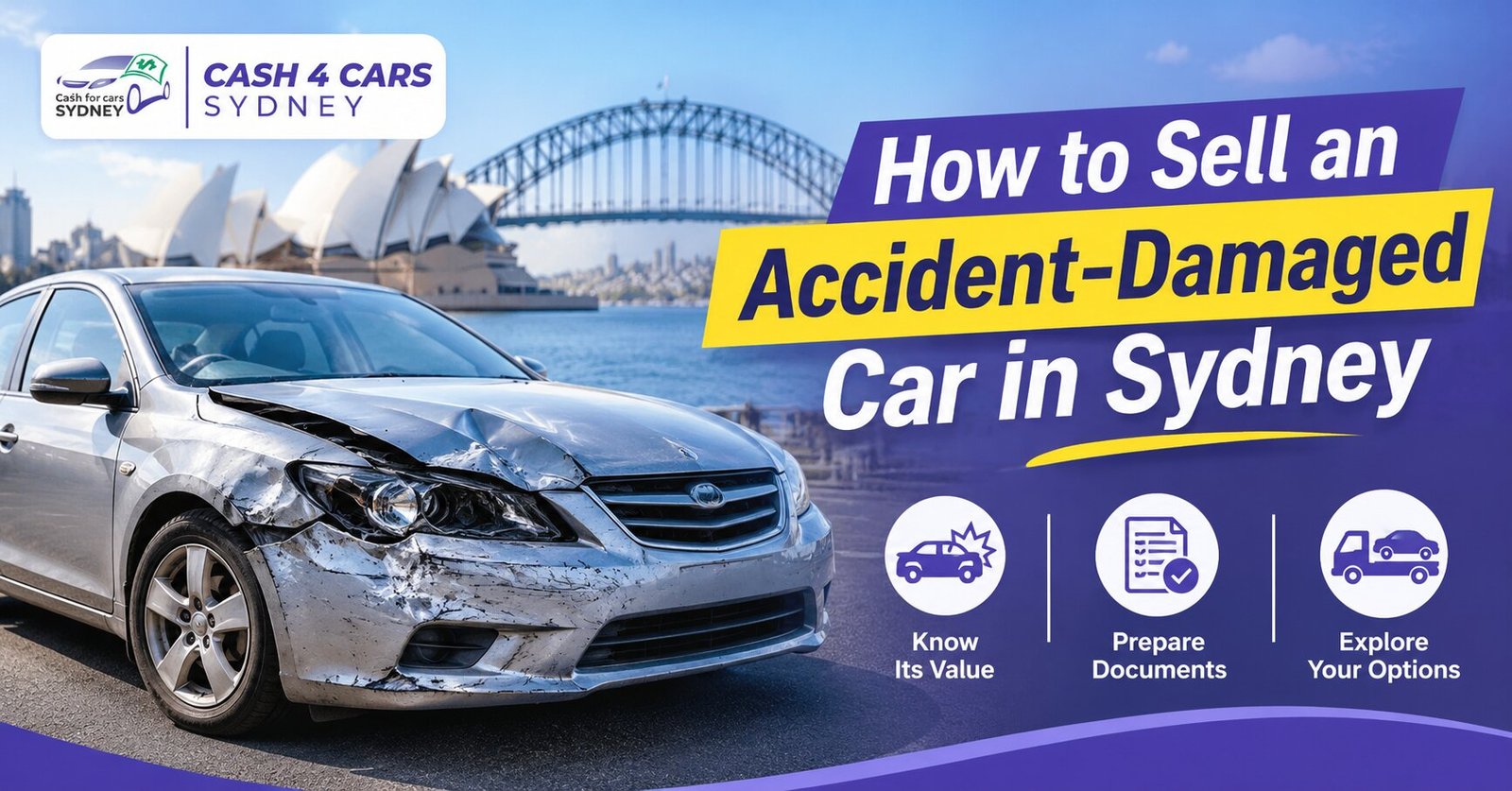
How to Sell an Accident-Damaged Car in Sydney
A car accident can leave vehicle owners facing unexpected repair costs, insurance paperwork and difficult decisions about what to do with their damaged vehicle. While some cars can be repaired and returned to the road, others may have extensive mechanical or structural damage that makes repairs financially impractical.
If your vehicle has been involved in a collision, selling it could be an alternative to spending more money on repairs. However, before making a decision, it is important to understand its condition, potential value and the legal requirements involved.
For Sydney motorists, there are several ways to sell an accident-damaged vehicle, depending on its condition and registration status. This guide explains how to sell an accident-damaged car in Sydney, what affects its value, which documents you may need and how to choose an appropriate selling option.
What Happens to Your Car After an Accident?
The condition of your vehicle after a collision determines what you can do with it. Some cars sustain minor cosmetic damage, while others experience serious mechanical or structural problems.
Understanding the type of damage is the first step towards deciding whether to repair, sell or dispose of your vehicle.
Understanding Different Types of Accident Damage
Accident damage can affect different parts of a vehicle, including:
- Cosmetic damage: Scratches, dents, damaged bumpers, broken headlights and damaged body panels.
- Mechanical damage: Problems with the engine, transmission, suspension or cooling system.
- Structural damage: Damage to the chassis, frame or other major structural components.
- Electrical damage: Faults involving wiring, sensors, airbags and electronic systems.
- Flood or secondary damage: Water exposure or additional damage resulting from an accident.
A vehicle with minor cosmetic damage may still be suitable for repairs and resale. However, extensive structural or mechanical damage can significantly reduce its market value.
Repairable Write-Offs vs Statutory Write-Offs
In Australia, vehicles declared written-off are generally classified as either repairable write-offs or statutory write-offs.
Repairable write-offs: These vehicles have sustained damage significant enough to be declared a total loss, but may be eligible for repair and re-registration under specific state requirements. In NSW, eligibility restrictions and inspections apply.
Statutory write-offs: These vehicles have sustained damage that makes them unsuitable for repair and re-registration for normal road use. They can generally only be sold for parts or scrap metal.
Understanding this distinction is important because the classification affects how you can legally sell or dispose of your vehicle.
You can find further information in the NSW Government’s written-off vehicle guidelines.
When Is a Damaged Car No Longer Roadworthy?
A vehicle may become unroadworthy when its damage affects essential safety components, including:
- Braking systems
- Steering and suspension
- Tyres and wheels
- Structural integrity
- Safety restraints and other essential safety equipment
Even if the engine starts and the vehicle can move, that does not necessarily mean it is safe to drive.
If you are uncertain about its condition, arrange an assessment by a qualified professional. Avoid driving a vehicle that may be unsafe and consider suitable transport arrangements.
Can You Sell an Accident-Damaged Car in Sydney?
Yes, you can sell many types of accident-damaged vehicles in Sydney. However, your available options depend on the extent of the damage, registration status and whether the vehicle has been officially recorded as a written-off vehicle.
Here are some common situations to consider.
Selling a Repairable Accident-Damaged Car
If your vehicle has been damaged but has not been declared a statutory write-off, you may have several selling options.
You could approach private buyers interested in repairing the vehicle, contact used-car buyers or obtain an offer from a vehicle recycler.
Before accepting an offer, compare the potential selling price with the estimated repair expenses. A vehicle that requires extensive repairs may not be worth restoring, particularly if its market value is relatively low.
Selling a Written-Off Vehicle
If your vehicle has been declared a statutory write-off, it cannot be repaired and re-registered for normal road use in NSW. However, it may still have value as a source of spare parts or recyclable materials.
Repairable write-offs have different requirements. NSW restricts which vehicles can be repaired and re-registered, so it is important to check the applicable rules before arranging a sale.
Always disclose the vehicle’s written-off classification to potential buyers.
Selling an Unregistered or Unroadworthy Car
An accident can leave a vehicle without valid registration or make it unsuitable for public roads.
You can still explore selling options, provided you have the legal authority to sell it and comply with applicable requirements.
If the vehicle cannot be driven, you will need to arrange suitable transportation. Check the registration and disposal requirements before completing the transaction.
How Much Is an Accident-Damaged Car Worth?
One of the biggest concerns for vehicle owners is determining how much they can receive for a damaged car.
There is no fixed price for accident-damaged vehicles. Two cars with similar damage may attract different offers because of their age, make, model, condition and demand for reusable components.
Several factors can influence the final value.
Vehicle Make, Model, Age and Condition
The original market value of your vehicle provides a useful starting point.
Popular models may have components that are in demand among vehicle recyclers and parts buyers. Newer vehicles may also retain value through reusable components, depending on the extent of the damage.
Older vehicles may have lower resale values, but their usable parts and recyclable materials can still contribute to an offer.
Extent of Mechanical and Structural Damage
The severity of the damage is another important consideration.
A car with damaged doors, bumpers or headlights may retain more usable components than one with extensive engine, chassis or structural damage.
Damage to airbags, suspension systems and electronic components can also influence the vehicle’s overall value.
Reusable Parts and Scrap Metal Value
Even when a vehicle is no longer suitable for road use, certain components may still be useful.
Depending on their condition, buyers may consider:
- Engines and transmission components
- Alternators and starter motors
- Wheels and tyres
- Doors, mirrors and body panels
- Electronic components
- Catalytic converters and other recoverable materials
- Recyclable steel and aluminium
The final offer depends on the condition, demand and recoverable value of these materials.
What Do You Need Before Selling an Accident-Damaged Car?
Having the necessary information ready can make the selling process easier and help prevent unnecessary delays.
Although the exact requirements depend on the type of sale, the following documents and details are worth preparing.
Proof of Ownership and Identification
You should be able to demonstrate that you own the vehicle or have the legal authority to sell it.
A buyer may request identification and supporting ownership documents before agreeing to purchase the car.
If the vehicle belongs to someone else, is part of an estate or is owned by a business, additional authorisation may be required.
Registration and Written-Off Vehicle Records
Keep your registration details available if the vehicle is registered.
If it has been declared a write-off, make sure you have the relevant insurance or assessment information showing its classification.
These details help potential buyers understand the vehicle’s legal status and determine the appropriate disposal process.
Insurance and Accident-Related Documents
If your vehicle has been involved in an insurance claim, keep relevant documents such as:
- Insurance assessment reports
- Claim reference details
- Repair estimates
- Written-off vehicle notifications
- Previous inspection reports, where available
If an insurance claim is still being assessed, speak with your insurer before arranging a sale. You should not transfer a vehicle that is subject to an unresolved ownership or insurance arrangement without confirming that you are entitled to do so.
What Are Your Options for Selling an Accident-Damaged Car?
Once you understand your vehicle’s condition and legal status, you can compare different selling options.
Each approach has its own advantages and limitations, so consider the time, costs and effort involved before making a decision.
Selling Privately
Selling privately may help you reach buyers interested in repairing the vehicle or purchasing it for usable components.
However, finding the right buyer can take time. You may need to advertise the car, respond to enquiries, organise inspections and negotiate the price.
You should also disclose known damage and the vehicle’s written-off status where applicable.
Trading In Your Damaged Vehicle
Some dealerships may consider accepting an accident-damaged vehicle as a trade-in, particularly if you are purchasing another car.
However, acceptance depends on the dealership’s policies and the extent of the damage.
A heavily damaged or written-off vehicle may not be suitable for a conventional trade-in arrangement.
Selling to Professional Car Buyers or Wreckers
Professional car buyers and vehicle wreckers may be an option when your car is no longer practical to repair or sell privately.
They may assess the vehicle based on its condition, reusable parts and scrap metal value.
When comparing Cash For Cars Sydney options, consider the vehicle assessment process, quoted price, collection arrangements and payment terms rather than focusing on the initial offer alone.
This can help you understand whether selling your vehicle to a professional buyer is a suitable alternative to repairing or privately advertising it.
How Does the Accident-Damaged Car Selling Process Work?
Selling an accident-damaged car does not have to be complicated. Preparing the right information and choosing an appropriate buyer can help make the process more straightforward.
Here is what you can generally expect.
Requesting a Quote for Your Vehicle
Start by contacting potential buyers and providing basic vehicle details, including:
- Make and model
- Manufacturing year
- Registration status
- Approximate kilometres travelled
- Location in Sydney
- Details of the accident damage
Providing accurate information helps the buyer assess your vehicle more effectively.
Providing Accurate Details About the Damage
Be honest about the condition of your car.
Mention whether it has suffered front-end, rear-end or side-impact damage. Also disclose any known engine problems, airbag deployment, structural damage or insurance write-off classification.
Photographs of the damaged areas can help buyers understand the vehicle’s condition before arranging an inspection.
Arranging Vehicle Collection
If your car is not roadworthy, transporting it to a buyer may be difficult.
After a collision, the immediate priority is often moving the damaged vehicle safely from the accident location. Depending on the circumstances, Accident Towing Sydney services may be needed to transport a vehicle to a repair facility, storage yard or another suitable location.
Before arranging transport, check whether your insurer, roadside assistance provider or another existing service covers the towing costs. If you need to organise towing independently, confirm the collection location, destination and charges beforehand.
Completing the Sale and Receiving Payment
Before handing over your vehicle, confirm the final agreed price and payment arrangements.
Check the buyer’s details, complete the required paperwork and retain a copy of the sale documentation.
For NSW-registered vehicles, follow the applicable notice of disposal and registration cancellation requirements.
Why Consider Selling an Accident-Damaged Car Instead of Repairing It?
When a car has extensive accident damage, spending more money on repairs may not always be financially practical.
Before deciding to restore the vehicle, consider the following points.
Avoid Costly Repairs
Repairing a seriously damaged vehicle can involve substantial expenses, particularly when the engine, transmission, airbags or structural components are affected.
Before committing to repairs, compare the estimated repair costs with the vehicle’s potential market value.
In some situations, selling the vehicle in its current condition may be a more sensible financial decision.
Save Time and Reduce the Effort of Private Selling
Finding a private buyer for a damaged vehicle can involve multiple inspections, price negotiations and questions about its condition.
A professional buyer may offer a more straightforward assessment process, depending on the vehicle and the buyer’s requirements.
Recover Value From Usable Components
A damaged vehicle may still contain components that can be reused or recycled.
Depending on the extent of the damage, its engine, transmission, wheels, electronic components and metal materials may retain value.
Getting multiple quotes can help you understand what your vehicle may be worth before accepting an offer.
Important Things to Check Before Handing Over Your Damaged Car
Before completing the sale, take a few practical steps to protect yourself and avoid administrative problems.
Confirming the Buyer’s Details
Check the buyer’s business details and make sure you understand who is purchasing the vehicle.
Request written confirmation of the agreed price, collection arrangements and payment terms.
Avoid handing over the vehicle or signing ownership documents before the agreed payment or trade has been received.
Removing Personal Belongings and Number Plates Where Required
Remove personal belongings, documents, garage remotes and electronic devices from the vehicle.
Check the glovebox, boot and storage compartments carefully.
In NSW, number plates must be handled according to the applicable registration cancellation or transfer process. If you remove the plates, you generally need to return them to a Service NSW Centre.
Completing the Necessary NSW Ownership and Registration Steps
Your responsibilities depend on whether the vehicle is sold with number plates, sold to a wrecker or declared a written-off vehicle.
For a standard sale of a NSW-registered vehicle, the seller must lodge a Notice of Disposal. Different requirements may apply to vehicles sold to wreckers without number plates or vehicles recorded as written-off.
Check the latest Service NSW vehicle disposal requirements to understand which process applies to your situation.
Keeping copies of the sale receipt and relevant documents is also a sensible precaution.
Frequently Asked Questions
Can I sell my car if it has been declared a write-off?
Yes. A written-off vehicle can still be sold, but the permitted use depends on its classification. Statutory write-offs can generally only be sold for parts or scrap metal, while repairable write-offs are subject to specific NSW repair and re-registration requirements.
Can I get cash for a badly accident-damaged car?
Potentially, yes. The amount depends on the vehicle’s make, model, age, condition, reusable parts and scrap value. Contact suitable buyers and compare their offers before deciding.
Do I need to repair my car before selling it?
No, not necessarily. You can explore selling a vehicle in its current damaged condition. However, you should disclose the damage accurately and understand any restrictions associated with its written-off status.
Can I sell an accident-damaged car without registration?
Yes, an unregistered accident-damaged vehicle can be sold, provided you have the legal authority to sell it and comply with applicable requirements. Since it cannot legally be driven on public roads without appropriate registration or permits, suitable transport arrangements may be necessary.
Can I sell a car that is still under an insurance claim?
You should first contact your insurer and confirm whether you have the right to sell the vehicle. If the insurer is assessing the car or has already taken ownership under a total-loss settlement, the sale arrangements may be different.
Is free accident car collection available in Sydney?
Some vehicle removal businesses offer free collection, while others may charge depending on the vehicle’s location and condition. Always confirm whether towing is included before agreeing to a sale.
Conclusion
Selling an accident-damaged car in Sydney involves more than simply finding someone willing to buy it. Understanding the vehicle’s condition, written-off classification, potential value and NSW disposal requirements can help you choose an appropriate selling option.
Whether your car has minor collision damage, serious mechanical problems or has been declared a write-off, take the time to compare offers and check the buyer’s requirements before completing the transaction.
With the right information, you can make a more confident decision about your damaged vehicle, avoid unnecessary repair expenses and choose a selling option that suits your circumstances.
