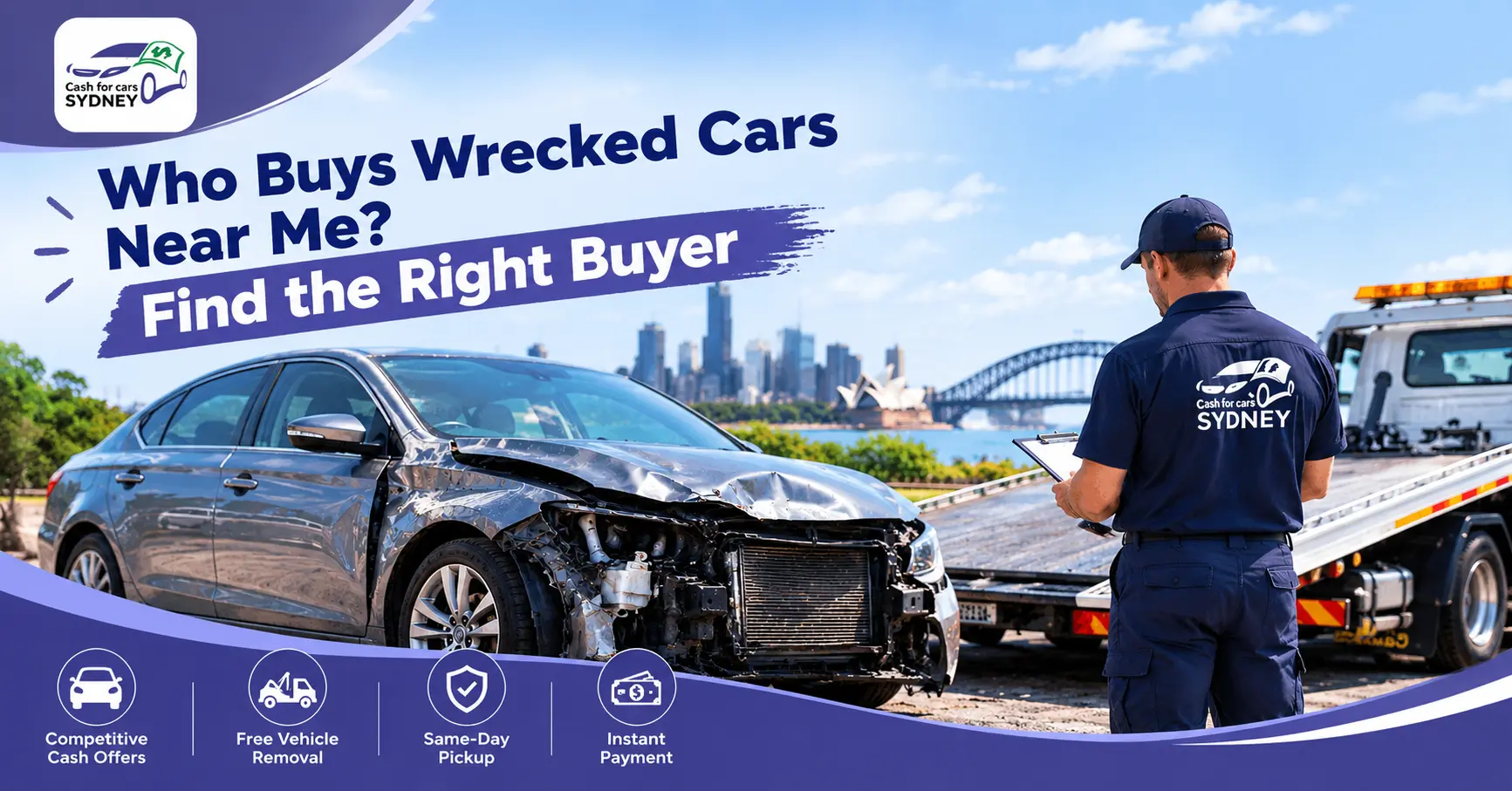
Who Buys Wrecked Cars Near Me? Find the Right Buyer

A wrecked car can still have value even when it has major accident damage, mechanical problems or is no longer safe to drive. Depending on its condition, it may be of interest to car wreckers, damaged-car buyers, cash-for-car businesses, private buyers or recycling businesses. If you are searching for “who buys wrecked cars near me?”, the right buyer will depend on the vehicle’s condition, the extent of the damage and what remains usable. Understanding your options can help you approach the right type of buyer and avoid spending more on a damaged car than it is worth.

Who Buys Wrecked Cars Near Me?

Several types of buyers may be interested in wrecked vehicles, but they generally look at them for different reasons.

Car wreckers may purchase heavily damaged, older or unwanted vehicles to recover usable parts and materials.

Damaged-car buyers may specialise in vehicles affected by accidents, mechanical problems or other forms of damage.

Cash-for-car businesses may accept vehicles in a range of conditions, depending on their assessment process and buying requirements.

Private buyers may consider a wrecked vehicle if they believe it can be repaired or if they need it for parts.

Scrap and recycling businesses may be interested when a vehicle’s remaining value is primarily in its metal and other recyclable materials.

The important point is that a wrecked car does not necessarily become worthless simply because it is damaged. Its remaining value depends on what the vehicle still has to offer.

What Types of Wrecked Cars Can You Sell?

Wrecked vehicles can be damaged in many different ways, and buyers may consider a range of conditions, including:

  • Accident-damaged cars
  • Non-running vehicles
  • Cars with major mechanical problems
  • Flood-damaged vehicles
  • Older vehicles with extensive wear
  • Severely damaged vehicles
  • Written-off vehicles, where applicable

A vehicle with substantial body damage may still contain usable components such as wheels, interior parts, electronics, mechanical components or other parts.

However, a car with extensive damage across several major systems may have considerably less value. This is why providing an accurate description of the vehicle is important when contacting a buyer.

Can You Sell a Wrecked Car for Cash?

Yes, a wrecked car may still be sold for cash, but the amount will depend on several factors.

A buyer may consider:

  • Make and model
  • Vehicle age
  • Extent of the damage
  • Mechanical condition
  • Whether the car runs
  • Condition of usable components
  • Demand for replacement parts
  • Scrap and recyclable material value
  • Cost and practicality of collection

For example, a relatively newer vehicle with significant accident damage may still contain valuable components. An older vehicle with extensive mechanical and body damage may have a different value based on its parts and recyclable materials.

If you are considering Cash For Cars Sydney, providing accurate details about the vehicle can make the initial assessment more straightforward. Information such as the make, model, year, condition and type of damage can help a buyer understand the vehicle before arranging an inspection or collection.

What Do Buyers Look for When Buying a Wrecked Car?

A buyer will usually consider more than just the visible damage.

Extent of Damage

A damaged bumper or panel is very different from major structural, mechanical or electrical damage. The severity and location of the damage can affect how the vehicle is assessed.

Mechanical Condition

The condition of the engine, transmission, suspension, steering and other major components may be relevant, particularly when some parts remain usable.

Usable Parts

A wrecked vehicle can contain components that may be recovered and reused. Depending on the vehicle, these could include body panels, wheels, interior components, electronics and mechanical parts.

Make, Model and Age

The demand for parts varies between vehicles. A particular make or model may have components that are easier to reuse or more sought after than those from another vehicle.

Vehicle Details

Buyers may need information confirming the vehicle’s identity and ownership. Having the relevant details available can help avoid delays during the selling process.

Collection Requirements

If the car cannot be driven, the buyer may also need to consider how it can be safely collected and transported.

Who Is the Right Buyer for Your Wrecked Car?

The right buyer depends on the condition and remaining value of your vehicle.

Vehicle condition Buyer to consider
Minor or moderate accident damage Damaged-car buyer
Major accident damage Car wrecker
Non-running vehicle Buyer offering vehicle collection
Older vehicle with limited repair value Wrecker or recycling buyer
Vehicle that can reasonably be repaired Private or used-car buyer

This does not mean that one type of buyer will always be suitable. Different businesses have different acceptance criteria, so it is worth checking what they purchase before making arrangements.

For heavily damaged vehicles, Car Wreckers Sydney can be a relevant option because wreckers may be interested in recovering usable components and materials rather than relying on the vehicle being suitable for normal road use.

How to Find Someone Who Buys Wrecked Cars Near You

Once you know what type of buyer you are looking for, you can narrow your search by checking businesses that specifically accept damaged, accident-damaged or non-running vehicles.

Before agreeing to a sale, consider these points:

Check What Vehicles They Accept

Not every buyer accepts every type of damaged vehicle. Explain the vehicle’s condition and ask whether it fits their buying requirements.

Provide Accurate Information

Give the make, model, year and details of the damage. If the car does not run, mention this from the beginning.

Ask How the Vehicle Is Assessed

Find out whether the buyer requires photographs, an inspection or specific vehicle information before providing an offer.

Confirm Collection Arrangements

If the vehicle cannot be safely driven, ask how it will be collected and whether removal is included in the service.

Understand the Selling Process

Before agreeing, clarify the required documents, payment arrangements and what happens after the vehicle is collected.

Compare Suitable Options

Comparing relevant buyers can help you understand the available options without choosing a buyer based solely on the first offer you receive.

How Much Is a Wrecked Car Worth?

There is no standard price for a wrecked car because every vehicle has a different combination of damage, age, parts and materials.

The assessment may consider:

  • The vehicle’s make and model
  • Age and overall condition
  • Extent of accident damage
  • Engine and transmission condition
  • Usable mechanical and body parts
  • Demand for replacement components
  • Scrap and recyclable material value
  • Collection requirements

It is also important to consider repair costs. A vehicle may appear repairable at first, but extensive bodywork, mechanical repairs, electrical work or safety-system replacement can make repairs considerably more expensive.

Before spending money on major repairs, compare the likely repair costs with the vehicle’s condition and potential value.

What Should You Do Before Selling Your Wrecked Car?

A few simple steps can make the process easier.

Remove Personal Belongings

Check the seats, boot, glovebox, centre console and other storage areas for personal items.

Gather Vehicle Information

Have the relevant vehicle details and ownership documentation available.

Take Clear Photos

Photograph the exterior, interior and damaged areas. Clear images can help a buyer understand the vehicle’s condition before making arrangements.

Be Honest About the Damage

Mention known accident, mechanical, electrical or structural problems. Accurate information helps avoid misunderstandings during the assessment.

Check Whether the Vehicle Can Be Safely Moved

If the car has serious damage to its steering, brakes, suspension, wheels or structure, do not assume that it is safe to drive simply because the engine starts.

How Do You Sell a Wrecked Car That Cannot Be Driven?

A wrecked car does not necessarily need to be driven to the buyer.

If the vehicle is non-running or unsafe to drive, tell the buyer before making arrangements. They may be able to organise collection or advise you about suitable transport options.

When arranging Car Removal Sydney, provide accurate information about the vehicle’s condition and location. This helps ensure that the appropriate collection arrangements can be considered.

If the car has been involved in a serious accident, avoid attempting to drive it simply to complete the sale. Damage to the steering, brakes, suspension or structural components can create additional safety concerns.

Selling a Wrecked Car in Sydney

Sydney vehicle owners have several options when selling a wrecked car. The appropriate option depends on whether the vehicle is repairable, non-running, heavily damaged or primarily valuable for its parts.

Before contacting a buyer, consider:

  • How severe the damage is
  • Whether the vehicle still runs
  • Which components may remain usable
  • Whether repairs would be financially practical
  • How the vehicle will be collected
  • What documentation is required

For example, someone with a heavily damaged, older vehicle may investigate wreckers, while someone with a repairable accident-damaged car may also consider other types of buyers.

The important thing is to match the vehicle’s condition with a buyer that actually handles that type of vehicle.

What Happens to a Wrecked Car After You Sell It?

What happens next depends on the vehicle and the buyer.

A wrecked car may first be assessed to determine which components are usable. Parts that remain in suitable condition can potentially be recovered, while metal and other materials may be separated for recycling.

Some vehicles may also be repaired or used as a source of replacement components.

As a result, selling a wrecked car does not necessarily mean that the entire vehicle becomes waste. Different parts and materials may still have a useful purpose depending on their condition.

Common Mistakes to Avoid When Selling a Wrecked Car

Spending Too Much on Repairs

Major repairs can be expensive. Before committing to them, consider whether the likely cost is reasonable compared with the vehicle’s condition and potential value.

Hiding Major Damage

Failing to disclose significant damage can create problems during inspection. Being upfront is more practical.

Accepting the First Offer Without Understanding It

Ask how the vehicle was assessed and what is included in the proposed transaction.

Forgetting Personal Belongings

Once the vehicle has been collected, retrieving forgotten items may be difficult.

Ignoring Collection Requirements

If the vehicle cannot be driven, confirm who will arrange collection and how the car will be transported.

Understanding Your Other Options for a Wrecked Car

Selling to a buyer is not the only option available. Depending on the condition of the vehicle, you may consider repairing it, selling it as-is, selling usable parts, using a wrecker or arranging professional removal.

If you are still deciding what to do with the vehicle, our guide on how to get rid of a wrecked car explains these options in more detail.

The appropriate choice depends on the extent of the damage, repair costs, remaining vehicle value and how practical it is to keep the car.

Why Choose Cash 4 Cars Sydney for a Wrecked Car?

For Sydney vehicle owners looking to sell a damaged vehicle, Cash 4 Cars Sydney provides an option for discussing the vehicle’s condition and selling requirements.

Wrecked cars can require a different approach from ordinary used vehicles, particularly when they are damaged, non-running or difficult to transport. Providing accurate information about the vehicle helps establish what options may be available.

Where vehicle collection is required, the removal arrangements should also be confirmed before the sale is completed.

Final Thoughts

Finding someone who buys wrecked cars near you starts with understanding what your vehicle is worth and which type of buyer is likely to be interested.

Car wreckers, damaged-car buyers, cash-for-car businesses, private buyers and recycling businesses may all have different requirements. The condition of your vehicle, its remaining parts and the extent of the damage can influence which option is suitable.

Before selling, gather your vehicle details, document the damage, compare relevant buyers and confirm the collection arrangements if the car cannot be driven.

FAQs About Selling Wrecked Cars

Who buys wrecked cars near me?

Car wreckers, damaged-car buyers, cash-for-car businesses and some private buyers may purchase wrecked vehicles. The suitable option depends on the vehicle’s condition and the buyer’s requirements.

Can I sell a wrecked car that does not run?

Yes, some buyers accept non-running vehicles. You should explain that the car does not run and confirm how collection or transport will be handled.

Can I get cash for an accident-damaged car?

Potentially. The amount depends on factors such as the vehicle’s make, model, age, condition, extent of damage and remaining usable components.

Do car wreckers buy severely damaged cars?

Some car wreckers accept severely damaged vehicles, although acceptance requirements vary between businesses. The vehicle’s parts and remaining materials may be considered during assessment.

How is a wrecked car valued?

A buyer may consider the vehicle’s age, make and model, damage, mechanical condition, usable parts, material value and collection requirements.

Can someone remove my wrecked car?

Depending on the buyer and service, collection may be available for damaged or non-running vehicles. Confirm the removal arrangements before completing the sale.

How to Get Rid of a Wrecked Car That Is No Longer Safe to Drive

A wrecked car sitting in your driveway or garage can leave you wondering what to do next. After an accident or major mechanical failure, the vehicle may be too expensive to repair, difficult to sell privately or simply no longer safe to drive.

Knowing how to get rid of a wrecked car can help you make a practical decision without spending money on unnecessary repairs or taking risks by driving an unsafe vehicle. Depending on its condition, you may be able to repair it, sell it as-is, send it to a wrecker, sell usable parts or arrange professional removal.

This guide explains how to assess your options, what to do before disposing of a wrecked vehicle and how Sydney car owners can deal with a car that is no longer safe for the road.

Quick Answer: What Is the Best Way to Get Rid of a Wrecked Car?

The best way to get rid of a wrecked car depends on the extent of the damage, repair costs and the vehicle’s remaining value. If the damage can be repaired safely at a reasonable cost, fixing the car may be worthwhile. However, if the vehicle has serious structural or mechanical damage, selling it as-is, sending it to a wrecker or arranging professional removal may be a more practical option.

Before making a decision, assess the damage, compare repair costs with the car’s value and avoid driving the vehicle if there are any serious safety concerns.

How Do You Know When a Wrecked Car Is No Longer Safe to Drive?

Not every damaged vehicle needs to be permanently removed from the road. Minor body damage may be repairable, but serious accident or mechanical damage can affect the safety and reliability of the car.

Here are some common signs that a wrecked car may no longer be safe to drive.

Serious Structural Damage

Damage to the vehicle’s frame or chassis can affect how it handles and how well it protects occupants in another accident. Structural problems may not always be obvious, so a professional assessment can be important after a serious collision.

Brake or Steering Problems

If the brakes feel different, the steering pulls to one side or the vehicle becomes difficult to control, there may be damage to important mechanical components. These issues should be checked before driving the car again.

Airbag and Safety System Damage

Airbags, seat belts and other safety systems can be damaged during an accident. If these systems have deployed or are no longer functioning correctly, the vehicle may require significant repairs before it can safely return to the road.

Major Mechanical Problems

Engine, transmission, suspension and cooling system damage can also make a wrecked vehicle unreliable or unsafe. In some cases, the cost of repairing several major systems can quickly exceed the value of the car.

Severe Accident Damage

If the vehicle cannot operate normally after an accident, has leaking fluids, damaged wheels or major body damage, attempting to drive it could create further risks or cause additional damage.

If you are unsure about the condition of your vehicle, it is better to have it assessed rather than assuming it is safe to drive.

What Should You Do Before Getting Rid of a Wrecked Car?

Before selling, wrecking or arranging removal for your vehicle, there are a few things worth doing first.

Remove Your Personal Belongings

Check the glove box, centre console, boot, door pockets and under the seats. Remove personal documents, electronics, keys and anything else you want to keep.

Gather Important Vehicle Information

Have the basic details of the vehicle available, including its make, model, year and general condition. This information can help when discussing your options with a buyer, wrecker or removal service.

Check the Extent of the Damage

Make a note of visible damage and any mechanical problems you know about. If you are unsure whether the vehicle can be repaired safely, consider getting a professional assessment.

Take Clear Photos

Photos can help you accurately show the condition of the car when discussing selling or removal options. Take pictures of the exterior and any major visible damage.

Consider the Vehicle’s Remaining Value

Even a badly wrecked car may still have some value. Working components, reusable parts and recyclable materials can all contribute to its remaining worth.

Your Options for Getting Rid of a Wrecked Car

There is no single solution for every damaged vehicle. The right option depends on the age of the car, the severity of the damage, repair costs and how much value remains in the vehicle.

Repair the Vehicle

Repairing may be worthwhile if the damage is limited and the car still has a reasonable market value. Before committing to repairs, compare the expected cost with the value of the vehicle once repaired.

It is also worth considering whether the car has other existing mechanical problems that may require attention later.

Sell the Car as It Is

A damaged car may still appeal to buyers who are willing to repair it or use it for parts. Selling the vehicle as-is can save you from spending money on repairs before putting it on the market.

Be honest about the vehicle’s condition and provide accurate information about the damage.

Sell Usable Parts

If the car has valuable components that remain in good condition, selling parts separately may be an option. Engines, transmissions, wheels and other components can sometimes still be useful.

However, selling parts individually can take time and may not be the most convenient choice if you need the entire vehicle removed quickly.

Send the Vehicle to a Car Wrecker

A car wrecker can be a practical option for a vehicle with extensive accident damage, major mechanical failure or repair costs that no longer make financial sense.

Usable components may be recovered, while suitable materials can be processed for recycling. A Car Wreckers Sydney service may be worth considering if the vehicle is beyond economical repair but still contains parts or materials with value.

Arrange Professional Car Removal

Professional removal can be useful when the vehicle cannot be safely driven or you do not want to organise transport yourself. This option can make it easier to deal with a damaged car sitting at your home or another location.

How to Decide Whether to Repair, Sell or Scrap Your Wrecked Car

Before deciding what to do, compare your options based on the actual condition and value of the vehicle.

Option Best When
Repair The damage is limited and repair costs are reasonable compared with the car’s value
Sell as-is The vehicle still has value and another buyer may be willing to repair it
Sell for parts Valuable components are still in good working condition
Send to a wrecker The car has major damage but parts and materials may still have value
Arrange removal The vehicle cannot be driven and you need a convenient way to move it

When comparing these options, consider the following factors.

Compare Repair Costs With the Car’s Value

If repairs cost close to or more than the vehicle’s current value, spending the money may not make sense. This is particularly important for older cars with high kilometres or existing mechanical problems.

Consider the Extent of the Damage

Minor body damage is very different from serious structural or mechanical damage. A proper assessment can help you understand the true cost of getting the car back into safe working condition.

Think About Safety

A car should not remain on the road simply because it can still move. Damage to the brakes, steering, suspension or safety systems may require extensive repairs.

Consider the Age and Overall Condition

Older vehicles may already have wear and mechanical issues before an accident occurs. Adding expensive repairs to an ageing vehicle can make selling or wrecking a more practical choice.

Consider Future Reliability

Even after repairs, a badly damaged vehicle may require ongoing maintenance. If future reliability is a concern, getting rid of the vehicle may be the better long-term decision.

How to Get Rid of a Wrecked Car That Cannot Be Driven

If your vehicle is no longer safe or capable of being driven, the next step is to arrange a suitable way to deal with it.

Do Not Attempt to Drive an Unsafe Vehicle

Driving a vehicle with serious damage can put you and other road users at risk. Problems with the steering, brakes, suspension or structural components may not always be obvious.

If you believe the vehicle is unsafe, avoid driving it and look at other transport or removal options.

Find Out Whether the Car Needs Towing

A wrecked car that cannot be safely driven may need professional transport. A Car Towing Sydney service can help move a damaged vehicle when it needs to be transported to another location.

For vehicles damaged in a collision that need to be moved from an accident location, Accident Towing Sydney may also be a suitable option.

Choose the Most Suitable Option

Once you understand the condition of the vehicle, decide whether repairing, selling, wrecking or recycling makes the most sense.

The best choice will depend on the actual value of the vehicle and not simply which option seems quickest.

Arrange Collection or Removal

If the car is sitting at home, in a driveway or another suitable location, arranging collection can save you from having to organise transport yourself.

Before booking collection, make sure you have removed your belongings and can provide accurate information about the vehicle.

Can You Sell a Wrecked Car for Cash?

Yes, a wrecked car may still have value even if it cannot be driven. The amount offered can vary depending on the vehicle and its condition.

Some factors that can affect the value include:

Make and Model

Certain makes and models may have greater demand for parts, which can affect their remaining value.

Age of the Vehicle

Newer vehicles may contain more valuable components, although older vehicles can also have reusable parts and recyclable materials.

Extent of the Damage

A car with damage limited to one area may have more value than a vehicle with serious structural and mechanical problems.

Working Components

Parts such as engines, transmissions, wheels and electrical components may still have value if they remain in good condition.

Materials and Components

Even if the vehicle cannot be repaired, materials such as metal may still be recovered and processed appropriately.

For Sydney car owners who would prefer to sell rather than repair an unwanted or damaged vehicle, Cash For Cars Sydney can be an option to consider.

When Is a Car Wrecker the Best Option?

Sending a car to a wrecker can be a practical choice when repairing or selling the vehicle privately is no longer worthwhile.

A car wrecker may be suitable when:

  • The vehicle has severe accident damage
  • Repair costs are too high compared with its value
  • The engine or transmission has failed
  • The car has extensive rust or body damage
  • The vehicle is no longer roadworthy
  • Selling it privately would be difficult or impractical

Depending on the condition of the vehicle, usable components may be recovered before suitable materials are processed for recycling.

Getting Rid of a Wrecked Car in Sydney

For Sydney vehicle owners, dealing with a wrecked car can be particularly difficult when the vehicle cannot be driven and is taking up space at home.

A damaged car may be sitting:

  • In your driveway
  • In a garage
  • At your home after an accident
  • On private property
  • At another location where it cannot be safely driven

In these situations, arranging a Car Removal Sydney service can be a practical option for moving an unwanted or undriveable vehicle without having to organise transport yourself.

An Unwanted Car Removal service may also be suitable for a car that has been sitting unused for a long time, has major damage or is no longer worth repairing.

Cash for Cars Sydney provides Sydney vehicle owners with an option for dealing with unwanted and wrecked vehicles when repairing or keeping the car is no longer practical.

Before arranging removal, make sure you:

  • Remove all personal belongings
  • Have accurate information about the vehicle
  • Understand the general condition of the car
  • Check any relevant ownership requirements
  • Confirm when and where the vehicle can be collected

What Happens to a Wrecked Car After It Is Removed?

Many car owners are unsure what happens once a wrecked vehicle has been collected. The process can vary depending on the vehicle’s condition and the business handling it.

Vehicle Assessment

The vehicle may first be assessed to determine whether any parts or components can still be reused.

Removal of Reusable Parts

Components that remain in suitable condition may be separated for reuse.

Vehicle Dismantling

The vehicle can be dismantled to separate reusable components and different types of materials.

Metal Recycling

Suitable metals and other materials may be recovered and sent through appropriate recycling processes.

Responsible Disposal

Components that cannot be reused or recycled may need to be handled and disposed of appropriately.

This process can help recover value from a vehicle that is no longer suitable for the road.

Common Mistakes to Avoid When Getting Rid of a Wrecked Car

Getting rid of a damaged vehicle can be straightforward, but there are a few common mistakes that can cost you time or money.

Continuing to Drive an Unsafe Vehicle

Do not assume that a car is safe simply because the engine still starts. Serious damage to important safety systems may not always be visible.

Spending Too Much on Repairs

Before paying for expensive repairs, compare the total cost with the vehicle’s value and consider its age, condition and future reliability.

Forgetting Personal Belongings

Check the entire vehicle before it is sold or removed. Important items can easily be left in the glove box, boot or under the seats.

Choosing an Option Without Comparing Alternatives

Repairing is not always the best choice, and neither is wrecking. Take the time to compare your options based on the actual condition and value of the vehicle.

Providing Incorrect Information About the Vehicle

Be honest and accurate when describing the damage. Having the correct information can help you choose the most suitable option and avoid unnecessary complications.

Why Professional Removal May Be a Practical Option for an Unsafe Car

A badly damaged car can be difficult to deal with, especially when it cannot be driven or has been sitting unused for some time.

Professional removal may be practical because it can:

  • Avoid the need to drive an unsafe vehicle
  • Save you from organising transport yourself
  • Help remove a vehicle from private property
  • Be suitable for damaged and non-running cars
  • Provide a convenient option when repairs are no longer worthwhile

For some Sydney car owners, arranging professional removal can be easier than attempting to transport or sell a badly damaged vehicle privately.

Final Thoughts

Knowing how to get rid of a wrecked car starts with making an honest assessment of its condition. If the damage is minor and the vehicle can be safely repaired at a reasonable cost, keeping it may still make sense.

However, when repair costs are high, the car is no longer safe to drive or future reliability is uncertain, selling it as-is, sending it to a wrecker or arranging removal may be a more practical choice.

Before making your decision, remove your belongings, assess the damage, compare the available options and avoid driving the vehicle if there are serious safety concerns.

By choosing the option that best suits the condition of your vehicle, you can deal with a wrecked car safely and avoid spending more money than necessary.

FAQs

Can I get rid of a wrecked car that cannot be driven?

Yes. If a wrecked car cannot be safely driven, you can explore options such as professional towing, selling it as-is, sending it to a wrecker or arranging professional vehicle removal.

Is it worth repairing a badly wrecked car?

It depends on the cost of repairs, the extent of the damage and the vehicle’s current value. If repair costs are close to or higher than the value of the car, selling or wrecking it may be a more practical option.

Can I sell a wrecked car for cash?

Yes. A wrecked car may still have value depending on its make, model, age, condition, working components and recyclable materials.

Do I need to tow an undriveable car?

If the vehicle cannot be safely driven, professional towing or collection may be required to move it to another location.

What happens to a car after it goes to a wrecker?

The vehicle may be assessed for reusable components before being dismantled. Suitable parts can be recovered, while materials such as metal may be processed for recycling.

How can I get a wrecked car removed in Sydney?

Sydney car owners can explore towing or professional removal options depending on the vehicle’s condition and location. Before arranging collection, remove personal belongings and have accurate vehicle information available.

Read more: How Much Do Auto Wreckers Pay for Cars in Sydney

How Much Do Auto Wreckers Pay for Cars in Sydney

If you have an old, damaged or unwanted vehicle sitting in your driveway, you may be wondering, how much do auto wreckers pay for cars? There is no single price that applies to every vehicle. The amount offered can depend on the car’s make, model, age, condition, parts demand and recyclable value.

A vehicle that is no longer economical to repair may still have value through reusable components and recyclable materials. Even a car that does not run can potentially attract an offer depending on what can be recovered from it.

This guide explains what affects a wrecker’s offer, how vehicles are valued and what you should consider before selling.

Quick Summary

Auto wreckers don’t pay the same amount for every car. The value of your vehicle depends on factors such as its make and model, age, condition, parts demand and recyclable materials. Even an old, damaged or non-running car may still have value if it contains usable parts or recyclable materials. If you want to know how much your car could be worth, the best approach is to provide its details and request a quote based on its actual condition.

How Much Do Auto Wreckers Pay for Cars?

Auto wreckers don’t use one fixed price for every vehicle. The amount offered depends on the individual car and its potential value for parts, resale or recycling.

When assessing a vehicle, a wrecker may consider:

  • Make and model
  • Age and overall condition
  • Engine and transmission condition
  • Accident or body damage
  • Whether the vehicle is running
  • Demand for its parts
  • Completeness of the vehicle
  • Recyclable materials and scrap value
  • Current demand for the vehicle or its components

For example, a damaged vehicle with a usable engine, gearbox and other sought-after components may be worth more than an older vehicle with extensive damage and missing parts.

Rather than relying on a generic estimate, the most accurate way to find out what your car could be worth is to provide its details and request a vehicle-specific quote.

What Factors Affect a Wrecker’s Offer?

Several factors can influence how much a wrecker is prepared to pay.

Make and Model

The make and model can influence demand for a vehicle’s parts. Popular models may have stronger demand for replacement engines, transmissions, panels, lights, wheels, interior components and other parts.

This means two cars of a similar age can have different values depending on their make, model and parts demand.

Age of the Vehicle

Age is another factor, but an older vehicle isn’t automatically worth less.

An older car may still contain usable mechanical components, body parts or other items that can be recovered. Its overall condition and demand for those components can help determine its value.

Overall Condition

The condition of the vehicle plays an important role in determining its potential value.

Wreckers may look at:

  • Engine condition
  • Transmission
  • Body and panels
  • Interior
  • Wheels and tyres
  • Electrical components
  • Suspension and other mechanical parts

A vehicle with several usable components may have greater value than one where many major parts are damaged or missing.

Running or Non-Running Condition

A car doesn’t necessarily need to be running to have value.

A non-running vehicle may still contain usable parts and recyclable materials. However, the reason it doesn’t run can affect the offer.

For example, a vehicle with a minor mechanical fault may be assessed differently from one with a failed engine or significant mechanical damage.

Accident or Body Damage

Accident damage can reduce a vehicle’s value as a complete road-going car, but it doesn’t necessarily make the vehicle worthless.

Depending on the extent of the damage, components such as doors, mirrors, lights, wheels, interior parts and mechanical components may still be reusable.

Demand for Parts

Parts demand can have a significant influence on the value of a vehicle.

If certain components are in demand, a wrecker may see greater potential in purchasing the vehicle for dismantling and parts recovery.

This is one reason an old or damaged vehicle can still be worth selling rather than simply leaving it unused.

Scrap and Recyclable Materials

Cars contain recyclable materials such as steel, aluminium and other metals. These materials can contribute to a vehicle’s end-of-life value alongside its reusable components.

The Australian Government’s Department of Climate Change, Energy, the Environment and Water reports that Australia’s national resource recovery rate reached 66% in 2022–23, including a 63% recycling rate.

This broader resource-recovery picture highlights why recycling remains an important part of managing materials at the end of their useful life. However, scrap value is only one part of an individual vehicle’s assessment.

How Much Will Wreckers Pay for a Car That Doesn’t Run?

A non-running car can still have value, but the amount depends on its condition and what can be recovered from it.

Wreckers may consider:

  • Why the vehicle stopped running
  • Engine and transmission condition
  • Accident or structural damage
  • Availability of usable parts
  • Whether important components are missing
  • Recyclable materials
  • The cost and logistics of collecting the vehicle

For example, a car with a failed engine may still have usable panels, wheels, electronics, interior components and other parts.

If you’re considering Car Wreckers Sydney, providing accurate information about the vehicle’s condition can help you receive a more relevant assessment.

Can You Sell an Old, Damaged or Unwanted Car to a Wrecker?

In many cases, yes. Wreckers may accept vehicles in a variety of conditions, depending on their purchasing requirements.

This can include:

  • Old cars
  • Damaged cars
  • Accident-damaged vehicles
  • Broken-down cars
  • Non-running vehicles
  • Unwanted cars
  • End-of-life vehicles

The important thing is to describe the vehicle accurately when requesting a quote. Let the buyer know about major damage, mechanical problems or missing components so the valuation can be based on realistic information.

If your car has been sitting unused because repairs are too expensive, getting a quote can help you understand whether selling it is a better option than continuing to pay for repairs, registration or storage.

How Do Auto Wreckers Calculate a Car’s Value?

A wrecker generally looks at the vehicle’s potential value rather than simply its condition as a complete car.

A simplified valuation process looks like this:

Vehicle details → Condition assessment → Parts demand → Salvage value → Offer

The make, model and age provide a starting point. The condition of major components is then considered alongside demand for usable parts and the value of recyclable materials.

The vehicle’s location and collection requirements may also be relevant, particularly if it is damaged or cannot be driven.

This is why a simple online price estimate may not accurately reflect what a specific vehicle is worth.

How to Get an Accurate Offer for Your Car

If you want to know what your vehicle could be worth, providing clear and accurate information can make the quoting process easier.

Provide Your Vehicle Details

Have the make, model, year and variant available when requesting a quote.

Explain the Condition

Let the buyer know whether the vehicle runs and mention any known mechanical, electrical or body damage.

Mention Major Issues

If the engine, gearbox or another major component has failed, include that information rather than leaving it out.

Be Clear About the Vehicle’s Location

If the car needs to be collected, provide its location so suitable collection arrangements can be discussed.

Compare Suitable Offers

If you’re unsure whether an offer is reasonable, comparing quotes can give you a better understanding of your vehicle’s potential value and available selling options.

What Should You Check Before Accepting an Offer?

Getting a quote is only one part of selling your car. Before accepting an offer, make sure you understand the terms of the sale.

Consider asking:

  • Is the offer based on the vehicle information provided?
  • Is collection included?
  • What paperwork is required?
  • When will payment be made?
  • Are there any additional charges?
  • What happens if the vehicle’s condition differs from what was described?

A clear understanding of the process can help avoid surprises and make the sale more straightforward.

What Happens When You Sell Your Car?

Once you’ve decided to sell, the process can be relatively simple.

1. Request a Quote

Provide your vehicle’s basic details and explain its current condition.

2. Review the Offer

The vehicle is assessed based on factors such as its condition, parts demand and salvage value.

3. Accept the Offer

If you’re happy with the offer and the terms, you can proceed with the sale.

4. Arrange Collection

If the vehicle isn’t driveable, collection can be arranged where available. A Car Removal Sydney service can make this step more convenient for owners who cannot transport the vehicle themselves.

5. Complete the Sale

Complete the required paperwork and follow the agreed payment and collection arrangements.

Find Out What Your Car Could Be Worth With Cash4CarsSydney

If you’re still wondering how much do auto wreckers pay for cars, the best answer will always depend on your particular vehicle.

At Cash4CarsSydney, Sydney vehicle owners can request a quote by providing details about their car and its condition. Whether the vehicle is old, damaged, unwanted or no longer running, getting an individual assessment can give you a clearer idea of its potential value.

If you’re comparing Cash For Cars Sydney options, requesting a quote can be a simple first step before deciding whether you’re ready to sell.

Final Thoughts

So, how much will wreckers pay for a car? There isn’t a standard amount. Every vehicle is different, and the final offer can depend on its make, model, age, condition, parts demand, damage and recyclable value.

Even a car that is old, damaged or no longer running may still have value. Instead of relying on a general estimate, provide accurate details about your vehicle and request a quote based on its actual condition.

If you’re ready to find out what your car could be worth, Cash4CarsSydney can help you take the next step.

Frequently Asked Questions

How much do auto wreckers pay for cars?

Auto wrecker offers vary from vehicle to vehicle. Factors such as make, model, age, condition, parts demand and recyclable value can all affect the amount offered.

How much will wreckers pay for a car that doesn’t run?

A non-running car may still have value through usable parts and recyclable materials. The offer depends on why the vehicle doesn’t run and the condition of its remaining components.

Do car wreckers buy damaged cars?

Yes, many wreckers accept damaged vehicles. Accident damage, mechanical faults and missing components can affect the vehicle’s value, but they don’t necessarily make it worthless.

What makes a car worth more to a wrecker?

Strong demand for its parts, a usable engine or transmission, desirable components and good overall condition can contribute to a stronger offer.

Can I sell an old car to a wrecker?

An old car may still have value through its reusable components and recyclable materials. Its age, condition and parts demand will influence the offer.

Do wreckers buy unwanted cars?

Depending on their purchasing requirements, wreckers may buy unwanted vehicles in a range of conditions. Requesting a quote is a practical way to find out whether your vehicle is suitable.

Can a wrecker collect a car that cannot be driven?

Collection may be available for damaged or non-running vehicles. When requesting a quote, confirm whether vehicle collection is available and what arrangements apply.

How can I find out what my car is worth?

Provide the vehicle’s make, model, year and condition to a reputable buyer and request a vehicle-specific quote. This is generally more useful than relying on a generic online estimate.